Men and Grief
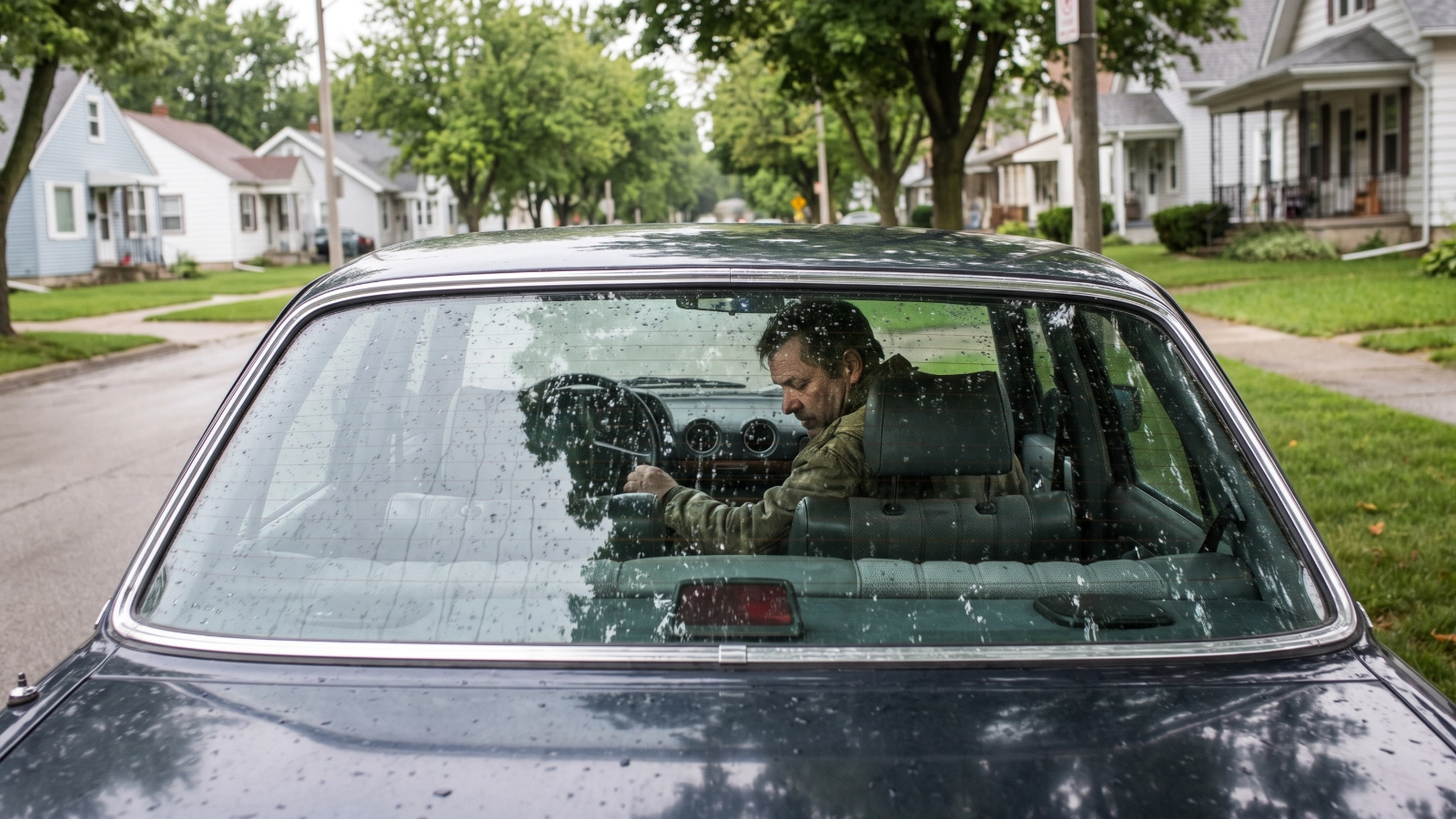
Six weeks after his father died, a man is working eleven hour days, snapping at his kids, and sleeping badly. If asked, he says he is fine. He is not lying, exactly. He does not have another word available and nobody has asked twice.
This is written for him, and for the person who is worried about him, who is statistically more likely to be the one reading it.
The difference is style, not depth
The assumption underneath most commentary on this is that men feel less or are worse at feeling. Neither holds up. Bereavement research finds comparable intensity, and on some measures men fare worse over the long term, particularly widowers, whose health outcomes after a spouse dies are notably poor.
What differs is expression. The framework most useful here comes from Kenneth Doka and Terry Martin, who distinguished intuitive grieving, which processes through feeling and talking, from instrumental grieving, which processes through thinking and doing. Neither is male or female inherently. Both distribute unevenly by gender, largely for reasons of upbringing rather than biology.
An instrumental griever processes by building something, fixing something, organizing something, or going for a very long drive. That is genuine grief work. It is not avoidance, and describing it as such, which a good deal of grief writing implicitly does, is one reason men conclude that support is not for them. We covered the same distinction as it plays out between couples in our post on when you and your partner grieve differently.
What it looks like when there is no outlet
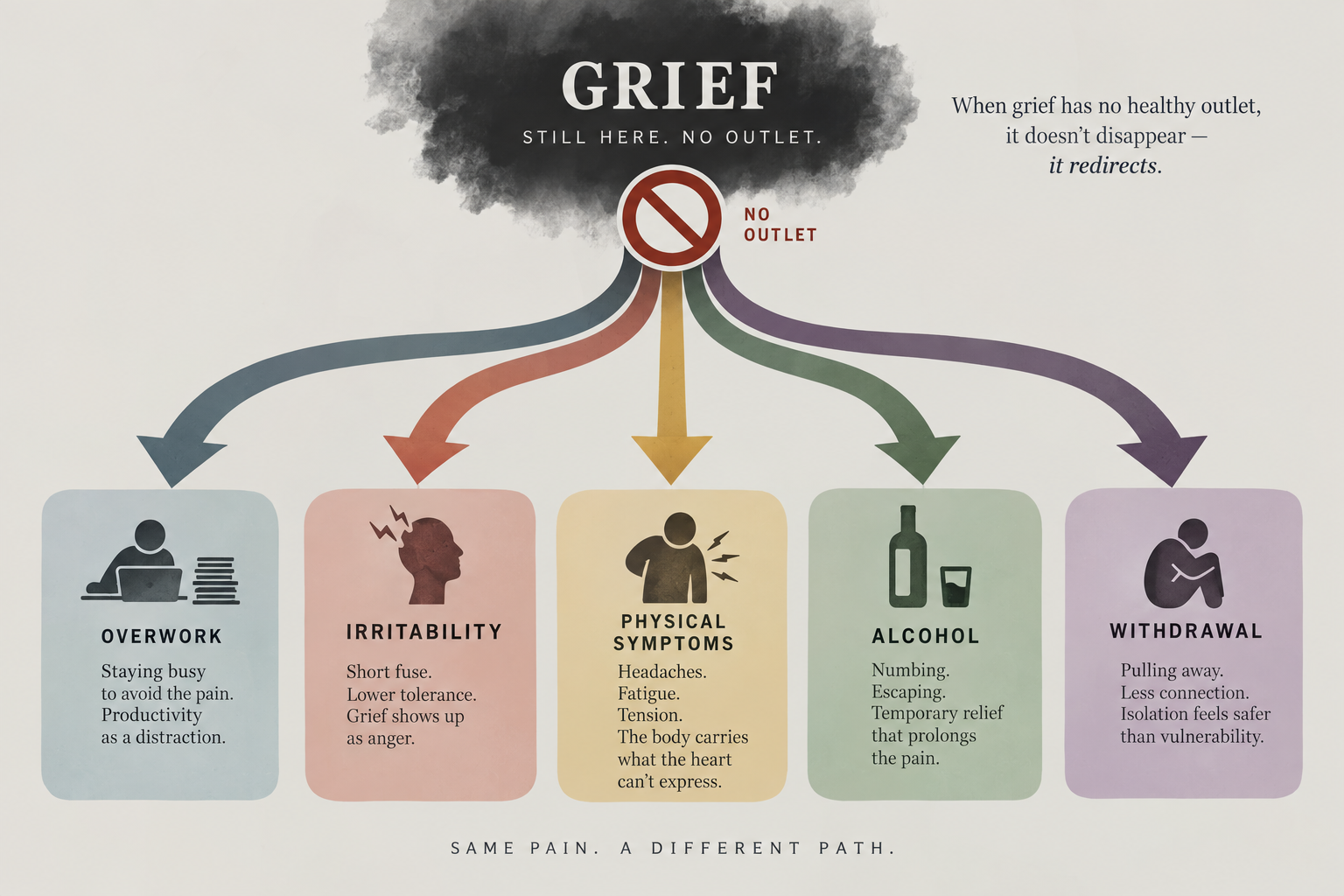
The problem is not instrumental grieving. It is grief with no outlet of any kind, which is a different thing and considerably more common. It relocates.
- Work. The most socially rewarded option. Nobody stops a man working twelve hour days after a death, and several people will admire him for it.
- Anger. Frequently the only emotion that was ever permitted, so a great deal gets routed through it. Disproportionate irritability at small things is one of the most reliable signs. We wrote about this specifically in the anger nobody warns you about in grief .
- Alcohol. A drink is the one socially acceptable way to alter your state without discussing why. This escalates quietly and is very often missed by everyone including the man himself.
- Physical symptoms. Back pain, chest tightness, gut trouble, exhaustion sleep does not fix. Men are more likely to present to a physician with a physical complaint than to a counselor with a loss, and the two are frequently the same thing. Our post on grief and the body covers the mechanism.
- Absence. Present in the house, not in the room. Frequently the thing families find hardest, because there is nothing to point at.
None of these are character failings. They are what a body does with something it has no route for.
Why the usual help does not land
Most men who eventually come report that the barrier was never the feeling. It was the format.
Sitting opposite a stranger and being asked how you feel is an unusually difficult opening for someone who has spent four decades being praised for not doing that. It is also, notably, a format nobody uses for anything else. Men talk while doing things: driving, working, walking, standing at a bar. Face to face and stationary is close to the worst configuration available.
The second barrier is the framing. A great deal of grief material is written in a register that reads, to a man who was raised on plain speech, as belonging to someone else. That is a marketing problem rather than a clinical one, and it costs a great many people support they would benefit from.
What tends to work instead
- Groups, more than individual work, for many men. Counterintuitive and consistently reported. A room where four other men are describing the same thing removes the sense of being uniquely deficient faster than any conversation with a clinician. Our post on what a grief support group is actually like describes the format.
- Side by side rather than face to face. Walking sessions, or anything with a task attached, changes what is possible to say. The eye contact is the obstacle more often than the subject.
- Naming it as a problem to work on. Framing counseling as addressing sleep, or the temper, or the drinking, is more accurate than framing it as processing grief, and it gets people through the door. The grief comes up regardless.
- Body-based work. For anyone who finds talking about it close to impossible, approaches that work through the body rather than through language are frequently the way in. Our sister practice, the Center for Mind Body Balance , offers this in the same building.
- One person, not a disclosure program. Most men do not want to talk widely about it. One person who knows the truth is generally sufficient and is a considerably easier ask.
If you are worried about a man in your life
A few things that hold up better than the obvious approach.
- Do not ask how he is doing. He will say fine. You will both know it was not an answer, and it will get harder to ask again. Ask something specific: whether he is sleeping, how work is going, whether the anniversary is on his mind.
- Raise it while doing something else. In the car, on a walk, working on something together. Sitting him down for a conversation about his feelings will end the conversation before it starts.
- Name what you see, not what you think it means. "You seem to be working a lot" lands better than "I think you are avoiding your grief."
- Keep it small and repeat it. One mention, no pressure, and then again in a month. Most men come to this on their own timeline and after several unremarkable openings rather than one significant conversation.
- Watch the drinking honestly. If it has increased since the death, that is worth naming directly, kindly, and once.
The American Foundation for Suicide Prevention publishes resources on men and mental health specifically, which is relevant here: middle-aged men are a high-risk group and grief is a period of elevated risk. If you are concerned about someone’s immediate safety, the 988 Suicide and Crisis Lifeline is available by call or text at any hour.
Frequently Asked Questions
I have not cried. Does that mean something is wrong with me?
No. Crying is one expression of grief and not a required one. What matters is whether the grief has any route at all, not whether it takes that particular form. Plenty of people grieve deeply without tears.
My husband refuses to go. What can I do?
You cannot make him, and pressure generally entrenches the position. What tends to work is lowering the stakes: one call, no commitment, and framed around a specific problem rather than around grief. You are also entitled to support for yourself regardless of what he decides.
Is there a group specifically for men?
Worth asking us about. Demand rather than principle determines whether one runs, and it comes up often enough that it is a live question.
Start with a conversation
Fifteen minutes on the phone. No form, no intake, no requirement to describe how you feel about anything.
You say what has happened and what is not working, whether that is the sleep, the temper, or the fact that you have not said a word about it since the funeral. We help you figure out a reasonable next step, and if we are not the right fit we will say so.
Call (201) 708-8448 or book a free 15 minute call. We see clients in Saddle River and across New Jersey by video and in person.
This blog post is for informational purposes only and does not constitute professional mental health advice, diagnosis, or treatment.