When people search for grief counseling near them, they are almost never doing casual research. Something has happened, and they have reached the point where carrying it alone has stopped working. What they want to know is simple and practical: is there someone close enough that I will actually go.
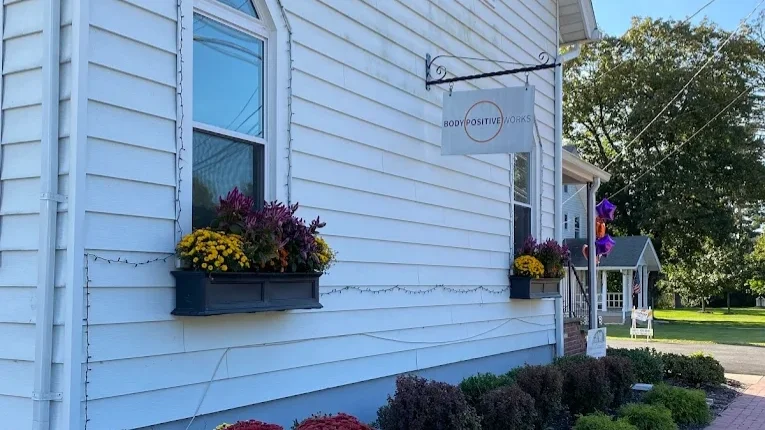
That question deserves a straight answer rather than a page of marketing copy. Grief Unbound operates out of the Center for Mind Body Balance at 96 Allendale Road in Saddle River, near the intersection of Route 17 and the Garden State Parkway. Below is what the trip looks like from the towns we serve most, when an online session makes more sense, and what to ask before booking anywhere, including here.
Why the drive matters more in grief than in other therapy
In ordinary circumstances, a 30 minute drive to a good therapist is a reasonable trade. Grief changes that calculation, for reasons that are physiological rather than a matter of motivation.
Bereavement puts the body into a sustained stress response. Sleep fragments, concentration thins, and the executive functions that handle planning and follow-through are measurably degraded. The American Psychological Association describes this cognitive fog as one of the most commonly reported and least anticipated features of early grief. People are surprised by how hard it is to do things that used to be automatic.
The practical consequence is that friction which would be trivial at any other time becomes decisive. An extra 20 minutes each way, a parking situation you have to think about, a 4pm slot that collides with school pickup: each one is a small reason to reschedule, and rescheduling twice is usually how people stop going altogether. This is not weakness. It is what a depleted nervous system does with obstacles.
So the honest advice is to weight convenience more heavily than you normally would, and to be suspicious of any plan that requires you to be at your most organized in the months when you will be least organized.
What the trip looks like from where you live
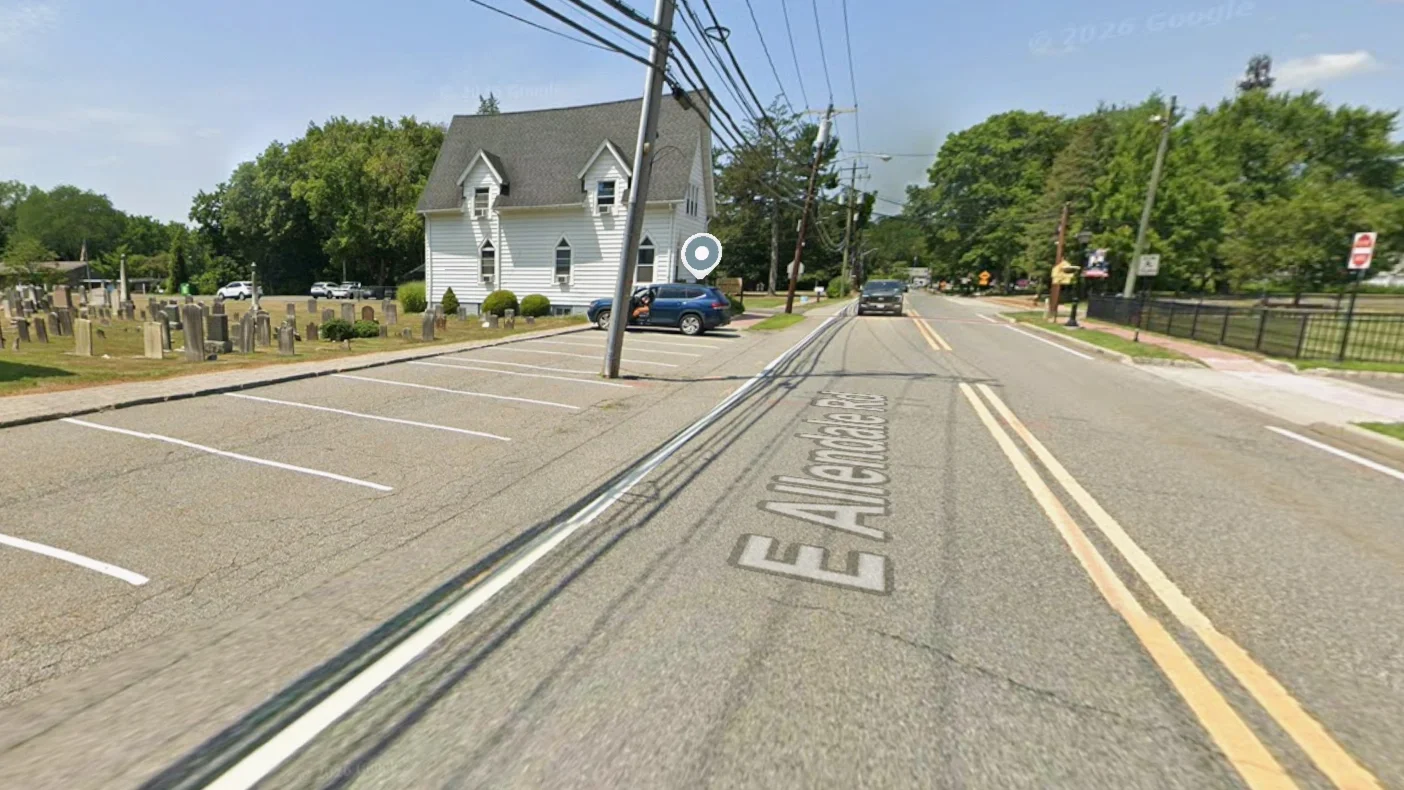
Saddle River sits in north-central Bergen County, which puts it within a short drive of most of the county. These are typical off-peak driving times, and the building has its own parking, so there is no street-parking calculation to make when you arrive.
Upper Saddle River, Allendale, Waldwick and Ho-Ho-Kus
Roughly 5 to 10 minutes. These are the closest towns, and for many residents the office is nearer than their own supermarket. If you are in Waldwick or Ho-Ho-Kus and have been putting this off because you assumed specialized grief support meant driving toward Hackensack or into the city, it does not.
Mahwah, Ramsey, Ridgewood and Wyckoff
Roughly 10 to 15 minutes, mostly on local roads rather than Route 17, which matters at rush hour. Ridgewood and Wyckoff residents generally come down through Ho-Ho-Kus or across Allendale. From Mahwah and Ramsey the run down Route 17 is short, and there is a local alternative if the highway is backed up.
Paramus, Glen Rock, Fair Lawn and Midland Park
Roughly 15 to 20 minutes depending on where in Paramus you start and what the retail corridor is doing. Evening appointments are usually a faster trip than late afternoon ones, which is worth knowing when you book.
Montvale, Park Ridge, Woodcliff Lake and the northern valley
Roughly 10 to 20 minutes down the Garden State Parkway or Chestnut Ridge Road. We see a steady number of clients from these towns, in part because specialized grief services are thin in the immediate area.
Hackensack, Teaneck, Fort Lee and southern Bergen County
Roughly 20 to 30 minutes. This is where the honest conversation about telehealth usually starts. Some people want the room and are glad to make the drive. Others do better with video, and there is no clinical penalty for choosing it.
Rockland County, New York
Suffern, Montebello and the towns along the border are 15 to 25 minutes. Note that New York residents should confirm licensure coverage with us before booking, since a therapist licensed in New Jersey cannot always see a client physically located in another state. We will tell you straightforwardly whether we can help or need to refer you.
Distance is not the only kind of friction
Drive time is the easiest thing to measure, which is why people over-rely on it. Several other things determine whether you keep going, and they are worth checking before you commit to anywhere.
- Parking. Somewhere with its own lot removes a small recurring stress. Circling for a spot before a session you were already dreading is how appointments get abandoned.
- Hours that match your actual life. A practice that only runs 9 to 4 is unusable for most working people, and taking a half day every week is not sustainable for long.
- What the arrival looks like. Some people are fine in a busy medical waiting room. Others will not go back after being seen crying by six strangers. It is a fair question to ask on the phone.
- Whether the drive home works. Grief sessions can be heavy, and a 30 minute highway drive immediately afterward is genuinely difficult for some people. Others find the drive is the part that lets them put it down before they get home.
When telehealth is the better answer
New Jersey requires insurers to cover telehealth at parity with in-person visits, which removed the main structural reason people used to treat video sessions as second best. In grief work specifically, there are situations where video is not a compromise but the better clinical choice.
- You are the primary caregiver for someone at home and cannot reliably leave for 90 minutes.
- You cry hard in session and do not want to drive immediately afterward.
- You are in the first weeks after a death and leaving the house at a fixed time is genuinely beyond you.
- Your work schedule only allows a lunch hour, and travel would eat the session.
- The loss happened at home and being in that space while you talk about it is useful rather than painful.
The counterweight is real too. Some people need a room that is not their own, with a door that closes and a drive home that separates the session from the rest of the day. If your house is full of the person you lost, being in it while you grieve them can be more than you can manage. There is no rule here. It is worth naming the preference out loud in the first call so the format matches what you actually need.
What to ask before you book anywhere
Proximity gets you in the door. It does not tell you whether the help is any good. Grief is a specialization, and a competent generalist therapist is not automatically equipped for it. Five questions worth asking whoever you call:
- Do you have specific training in grief, and what kind? Bereavement is not a standard part of every graduate program. Ask for the training by name.
- Do you work with my type of loss? Suicide loss, pregnancy loss, and the death of a child each carry features that general bereavement work does not address well.
- Do you offer groups as well as individual sessions? For many people, group support does something individual therapy cannot , and a practice that offers both can move you between them as needs change.
- What happens if my grief is not improving in six months? A good answer involves recognizing prolonged grief disorder and having a plan for it. A bad answer is reassurance that it takes as long as it takes.
- What does it cost, and what will you tell me before the first session? You should know the fee before you arrive, not after.
The Columbia Center for Prolonged Grief is a useful reference point for what specialized grief training actually involves, and the research base behind it. If you want the longer version of this framework, we wrote a fuller guide to choosing a grief counselor in Bergen County.
Frequently Asked Questions
How quickly can I get an appointment?
Usually within a week or two for individual sessions. Groups run on a schedule and start on set dates, so the wait there depends on where you land in the cycle. If what you are describing sounds urgent, we say so on the call and prioritize accordingly.
Do I have to know what kind of help I want before I call?
No, and most people do not. The free 15 minute call exists to sort that out. You describe what happened and how it is going, and we suggest a starting point. Some people leave that call booked into a group, some into individual sessions, and some with a referral elsewhere because we were not the right fit.
Is there anywhere closer if I live in southern Bergen County?
There may be, and we will tell you if we know of one. We would rather you get help nearby than make a long drive to us out of loyalty to a website you happened to find. If the drive is the obstacle, ask about video before you rule us out.
Start with a conversation
You do not need to have your situation organized before you call. You do not need to know whether you want a group or individual sessions, or whether you would rather come in or meet by video. That is what the call is for.
Fifteen minutes, no charge, no obligation. You say what happened. We listen, ask a few questions, and help you figure out a reasonable next step. If we are not the right people for what you are carrying, we will say so and point you toward someone who is.
Call (201) 708-8448 or book a free 15 minute call. Grief Unbound is based at the Center for Mind Body Balance in Saddle River, which means the wider integrative team, including somatic work and body-based care, is down the hall rather than across town.
This blog post is for informational purposes only and does not constitute professional mental health advice, diagnosis, or treatment.