
The first thing most grieving parents notice is that their children's grief looks nothing like their own.
Your eight-year-old is sobbing one minute, asking what's for dinner the next, then drawing pictures of their dead grandparent at the kitchen table. Your fifteen-year-old has gone silent — withdrawn into headphones and a closed bedroom door — and you can't tell whether they are coping or not coping, whether they need space or need help.
You are exhausted, grieving yourself, and now also responsible for guiding small humans through grief. And you do not have a manual.
This guide is for you. It walks through how grief actually shows up in children and teenagers, what's normal, what warrants professional support, and how to choose it well in Bergen County, NJ.
When children and teens lose someone
Childhood loss is more common than most people realize. By age 18, approximately one in fourteen American children will have lost a parent, according to the National Alliance for Grieving Children. Many more will have lost a grandparent, sibling, friend, classmate, pet, or other significant person. And every loss matters.
The good news: children and teens are remarkably resilient when grief is met with the right support. The harder news: when grief is not met — when adults around them pretend nothing is wrong, when the loss is minimized, when the child is left alone to figure it out — the consequences can echo for decades.
National organizations like the National Alliance for Grieving Children and The Dougy Center have spent decades demonstrating that supported childhood grief leads to healthy long-term integration. Unsupported childhood grief, on the other hand, is one of the most reliable predictors of adult mental health challenges.
How Grief Looks Different in Children and Teens
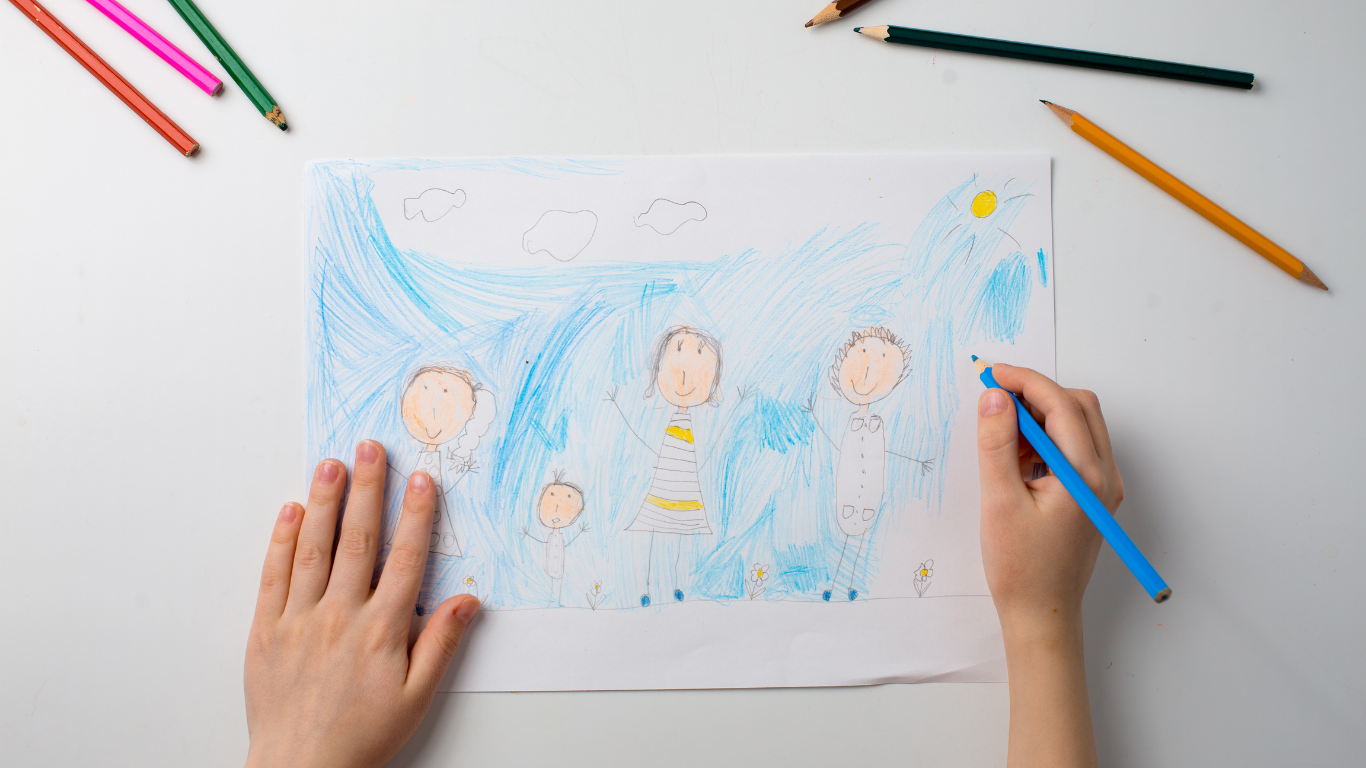
Children do not grieve like adults. They grieve in bursts. They take breaks from grief in ways that can look like indifference. They process through play, drawing, repetition, and physical movement more than through sustained verbal reflection.
This often confuses well-meaning adults, who interpret a child's apparent fine-ness as evidence the child is "doing okay." Sometimes they are. Sometimes they are not.
Myths parents commonly believe
Several beliefs make it harder for parents to recognize grief in children — or to respond to it effectively.
- "They're too young to really understand, so they won't really grieve." Wrong. Even infants and toddlers grieve, often through somatic and behavioral changes if not yet through words.
- "Talking about it will upset them more." Wrong. Avoidance teaches children that the loss is unspeakable, which makes it harder to integrate.
- "They seem fine, so they must be fine." Sometimes. But "fine" can also be a child or teen suppressing grief because they sense their parent cannot hold it. Worth checking in.
- "I should protect them from my own grief." Modeling healthy grief — including being seen sad, talking openly about the loss, demonstrating that grief is bearable — is one of the most powerful things a parent can do.
- "Time will take care of it." Sometimes. Often, no. Unsupported childhood grief tends to surface later, sometimes decades later, in adult mental health challenges.
The Dougy Center has extensive free resources for parents navigating these exact conversations with children and teens at every developmental stage.
Developmental Stages of Grief: What to Expect at Every Age

Grief takes very different shapes at different ages. Understanding what is developmentally typical at each stage helps parents know what they are seeing — and when to seek outside support.
Toddlers and preschoolers (ages 2–5)
Young children do not understand that death is permanent. They may ask repeatedly when the person is coming back. They may seem unaffected one moment and inconsolable the next. They are highly sensitive to the emotional state of the adults around them; their grief is often regulated through the regulation of their parents.
Common signs: regression (loss of recently-acquired skills like potty training, increased clinginess), sleep disruption, repetitive questions about the death, magical thinking ("did I cause this by being bad?").
Elementary-age children (ages 6–10)
Children in this range begin to understand the permanence of death but still process it in concrete, sometimes startling ways. They may become preoccupied with the physical mechanics of death — what happens to the body, decomposition, what the deceased can or cannot still do. This is normal, not morbid.
Common signs: anxiety about other loved ones dying, somatic complaints (stomachaches, headaches), school performance changes, social withdrawal or, conversely, increased anxiety about being separated from caregivers.
Tweens (ages 11–13)
A particularly tender age. Tweens are old enough to grasp the full reality of the loss but not yet developmentally equipped to process it. Peer comparison kicks in; they may feel different from friends in ways that compound the grief.
Common signs: irritability, withdrawal, identity questions ("who am I now without them?"), difficulty concentrating, mood swings beyond developmental baseline.
Teenagers (ages 14–18)
Teen grief is often invisible. Adolescents are developmentally wired to differentiate from adults — which means many will not bring their grief to parents or counselors. They may bring it to peers, to creative outlets, or to no one at all.
Common signs: withdrawal, mood disruption, academic decline, risk-taking behavior, social changes, sleep and appetite disruption, increased anxiety or depression. Importantly: teens are at higher risk for substance use as grief self-medication, and at higher risk for suicidal ideation in the first year after a major loss. This is not meant to alarm — most teens recover well — but to underscore the importance of professional eyes when the loss is significant.
What Grief Counseling for Young People Actually Looks Like

Effective grief work with children and teens looks very different from adult therapy. It typically involves:
- Play and art-based modalities. Especially for younger children, processing happens through drawing, sand tray, puppets, music, and movement. Not because therapy can't be "real" with children — but because this is how children think.
- Family-inclusive work. Many sessions involve parents alongside the child, particularly for younger kids. Family grief therapy is often as important as individual sessions.
- Developmentally-attuned conversation. Skilled grief therapists adjust language, pacing, and depth to the child's age. They don't push for adult-style verbal processing.
- Body-based and somatic work. Children often process grief somatically — through movement, breath, gentle yoga, art. Grief Unbound's connection to the Center for Mind Body Balance means we can integrate these modalities for kids and teens.
- Group support, when appropriate. For older children and teens, peer grief groups can be powerful in the same way they are for adults — though they require careful facilitation. Our post on what to expect in a grief support group explains what this kind of support looks like.
- Short-term and longer-term options. Some children benefit from 6–10 sessions of focused grief work. Others, particularly those with traumatic loss or complicated family situations, benefit from longer engagement.
Warning signs that a child or teen needs professional support
Many grieving children do not need formal therapy. Family conversation, school counselor support, and time may be enough. But certain signs warrant professional evaluation:
- Persistent withdrawal from previously enjoyed activities for more than 6 weeks
- Significant academic decline that does not recover
- Sleep or appetite changes that persist
- Expressions of wanting to die, join the deceased, or hurt themselves (always immediate cause for professional consultation)
- Substance use
- Self-isolation that doesn't lift
- Anger or aggression that is new or intensified
- Repeated somatic complaints (headaches, stomachaches) without medical cause
- Anxiety about other loved ones dying that becomes obsessive
- Refusal to discuss the deceased at all (avoidance) or inability to think about anything else
If any of these persist past 6–8 weeks, it is worth reaching out to a grief therapist.
Special losses that require additional support
When a parent dies: The death of a parent is one of the most defining childhood losses. The surviving parent (or other primary caregiver) is often grieving themselves, which limits their capacity to support the child. Children frequently worry the surviving parent will also die. Routines and stability matter enormously — consistent caregivers, schedules, and rituals help children feel safe enough to grieve. Birthdays, holidays, and milestones often re-trigger grief for years.
When a sibling dies: Sibling loss is particularly under-supported and is a frequent example of disenfranchised grief in young people. Surviving siblings often become "the forgotten griever" because parents are devastated by the loss of a child and well-meaning others focus on the parents. The surviving sibling carries their own profound grief, survivor's guilt, the disorientation of a changed family system, and the pressure — real or imagined — to take care of grieving parents. The Compassionate Friends maintains a sibling-specific support arm that is worth knowing about.
Sudden or traumatic loss: Suicide loss, overdose loss, accident loss, and other traumatic deaths require trauma-informed care alongside grief work. Children and teens are particularly vulnerable to developing PTSD-like responses to traumatic loss, and skilled clinical support is especially important here. The Dougy Center offers a wealth of free resources for parents navigating these specific kinds of loss with young people.
Frequently Asked Questions About Grief Counseling for Children and Teens in Bergen County
At what age can children start grief counseling?
Children of any age can benefit from grief support. Even toddlers and preschoolers grieve through behavioral and somatic changes if not yet through words. Skilled grief therapists adjust modalities to developmental stage — play-based and art-based approaches work for young children, while talk therapy and somatic methods are used with older teens.
How do I know if my teenager needs grief counseling after a loss?
Seek professional support if your teen shows persistent withdrawal from activities they once loved, significant academic decline, sleep or appetite changes, substance use, or any expression of wanting to die or join the deceased. If any of these signs last more than six to eight weeks after the loss, contact a grief therapist.
What does grief counseling for children actually look like in a session?
For younger children, sessions typically use play, drawing, sand tray, puppets, or movement — not adult-style verbal therapy. For tweens and teens, sessions blend age-appropriate conversation with creative and somatic modalities. Many sessions are family-inclusive, especially for younger children, and parents are often involved alongside the child.
Does my child need grief counseling if they seem fine after a loss?
"Fine" deserves a second look. Children often suppress grief because they sense a parent cannot hold it, or because they lack the language to express it. If fine-ness persists alongside behavioral changes, social withdrawal, or somatic complaints, a grief therapist can help assess what is actually happening.
Is grief counseling available for children in Bergen County, NJ on telehealth?
Yes. Grief Unbound is based in Saddle River and offers in-person sessions at 96 Allendale Road as well as telehealth grief counseling for children, teens, and families across New Jersey. A free 15-minute discovery call is available by phone at (201) 708-8448 or by booking online.
How Grief Unbound Supports Grieving Children and Teens in Bergen County
Several members of our team work specifically with adolescents, young adults, and families.
- Melanie Struble, LCSW, LCADC, our founder, has 33+ years of work with adolescents, adults, and families — and trained directly under David Kessler, whose work with grieving families is foundational in the field.
- Wendy Coffey, LCSW brings 33 years of family work, including with adolescents and young adults.
- Julia Tsakalis, LCSW uses Internal Family Systems (IFS) and Brainspotting — both especially well-suited to adolescent grief — and teaches a Grief and Loss course at the college level.
For families, we offer integrated approaches that include the parent and child together where appropriate, drawing on the body-based modalities at the Center for Mind Body Balance when somatic grief support is helpful for younger clients.
For dedicated children's grief programs (such as ongoing peer groups for grieving kids), we maintain referral relationships with specialized children's grief organizations and are happy to help families find the right combined fit during the discovery call.
Beginning with a conversation
If you are worried about a child or teen, please don't wait. Early support makes an enormous difference.
A free 15-minute discovery call is the simplest first step. You can call us yourself, before any conversation with the young person. We listen, ask a few questions, and help you figure out whether grief therapy makes sense — and if so, with whom.
We are based at 96 Allendale Road in Saddle River, serving Bergen County and offering telehealth across New Jersey.
Children and teens grieve. They need support to grieve well. You don't have to figure out how to give them that alone.